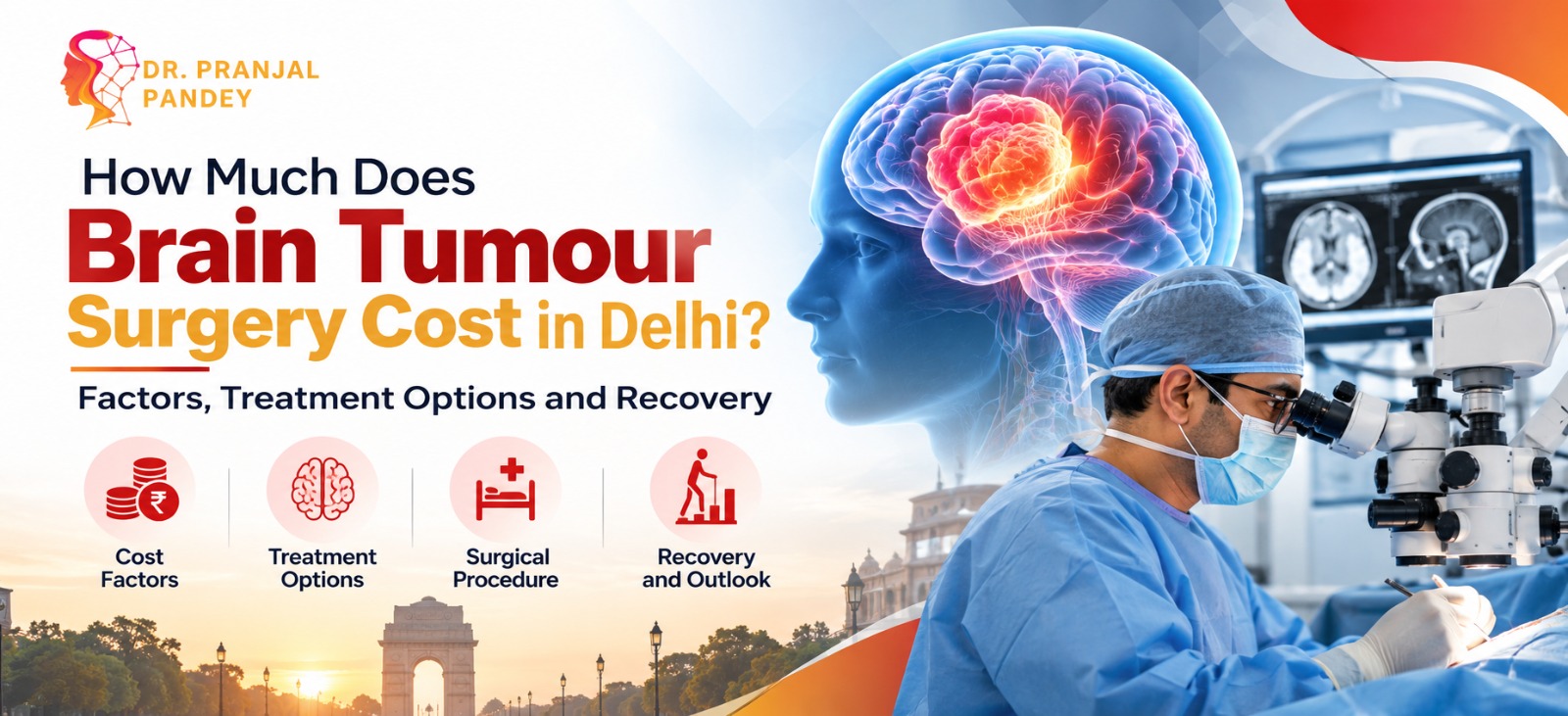
Brain tumour surgery is a major medical decision, and understanding the potential cost can help patients and their families prepare for treatment. The cost of brain tumour surgery in Delhi varies depending on the type of tumour, its location, the complexity of the procedure, the hospital facilities and the patient’s overall health.
If you or a family member has been diagnosed with a brain tumour, consulting an experienced neurosurgeon is an important step toward understanding the available treatment options and expected expenses.
In this guide, we explain the factors that influence brain tumour surgery costs in Delhi, the different treatment approaches, what may be included in a hospital bill and what patients should know about recovery.
How Much Does Brain Tumour Surgery Cost in Delhi?
The cost of brain tumour surgery in Delhi can vary considerably from one hospital to another. There is no single price that applies to every patient because each tumour presents different surgical requirements.
The final estimate may depend on:
- The size, type and location of the brain tumour
- Whether the tumour is benign or malignant
- The complexity and duration of the surgery
- The surgical technique and technology required
- The surgeon’s fees and hospital charges
- The length of hospital and intensive care stays
- Additional investigations, medications and rehabilitation
For an accurate estimate, patients should obtain an individualized treatment plan and written cost breakdown from their hospital. Any online price range should be treated as an estimate rather than a confirmed quotation.
What Factors Affect Brain Tumour Surgery Costs?
1. Type and Location of the Tumour
Brain tumours can develop in different parts of the brain, and their location plays a significant role in surgical planning.
Some tumours are relatively accessible, while others may be close to areas responsible for speech, movement, vision or other essential functions. Tumours located near critical blood vessels or deep within the brain may require more complex surgical planning and specialized techniques.
2. Type of Surgical Procedure
The recommended procedure depends on the tumour’s characteristics and the patient’s condition.
Common approaches include:
- Craniotomy: A section of the skull is temporarily removed to provide access to the tumour.
- Minimally invasive approaches: Selected tumours may be treated using techniques designed to reduce the size of the surgical opening.
- Endoscopic procedures: In suitable cases, an endoscope can help the surgeon access particular areas through a smaller opening.
- Biopsy: A tissue sample may be obtained when a definitive diagnosis is needed and removal of the entire tumour is not appropriate.
Not every brain tumour requires surgery. Depending on the diagnosis, treatment may involve monitoring, radiation therapy, medication or a combination of approaches.
3. Preoperative Tests and Imaging
Before surgery, patients may need MRI scans, CT scans, blood tests and other investigations. Depending on the tumour and surgical plan, additional imaging or functional assessments may also be recommended.
These investigations help the medical team understand the tumour’s position, plan the procedure and assess the patient’s fitness for surgery.
4. Hospital Stay and Intensive Care
Some patients require close monitoring in an intensive care unit after surgery, while others can move to a regular hospital room sooner.
The length of the hospital stay depends on the procedure, the patient’s recovery and whether complications occur. Hospital room category, nursing care, medications and postoperative investigations can also influence the total bill.
5. Histopathology and Further Treatment
After tumour tissue is removed or biopsied, laboratory examination may be necessary to determine the tumour’s exact type.
Depending on the diagnosis, further treatment such as radiation therapy, chemotherapy or long-term imaging follow-up may be recommended. These expenses may be separate from the initial surgery package.
What Is Usually Included in the Cost of Brain Tumour Surgery?
Before confirming treatment, ask the hospital for a written estimate that clarifies which services are included.
| Expense | What to check |
|---|---|
| Neurosurgeon and surgical team | Professional fees and related charges |
| Operating theatre | Equipment and procedure charges |
| Anaesthesia | Anaesthesiologist and medication fees |
| Hospital room | Room category and expected duration |
| ICU care | Daily charges and estimated requirement |
| Diagnostic tests | MRI, CT, blood tests and other investigations |
| Medicines and consumables | Items included in the package and exclusions |
| Pathology | Tumour tissue examination and related tests |
| Follow-up care | Consultations, scans and rehabilitation |
Ask whether the quotation covers unexpected additional hospital days or complications. Also check whether your health insurance policy requires preauthorization and which expenses are eligible for reimbursement.
What Are the Treatment Options for a Brain Tumour?
Treatment depends on the tumour’s type, size, location, growth pattern and symptoms, as well as the patient’s overall health.
Surgical Removal
Surgery may be recommended when a tumour can be safely removed or when tissue is required to establish a diagnosis. The extent of removal depends on the tumour’s location and the risk of damaging surrounding brain tissue.
Radiation Therapy
Radiation therapy may be used for certain tumours, including those that cannot be completely removed or that require additional treatment after surgery. The decision depends on the tumour diagnosis and specialist recommendations.
Chemotherapy or Other Medicines
Some brain tumours respond to chemotherapy, targeted treatments or other medicines. These treatments are selected according to the tumour’s pathology and relevant clinical findings.
Observation and Regular Monitoring
Certain small, slow-growing tumours that are not causing significant symptoms may be monitored with regular imaging rather than treated immediately.
A neurosurgeon and the wider medical team can explain the benefits, risks and alternatives relevant to each individual case.
How Long Does It Take to Recover From Brain Tumour Surgery?
Recovery varies depending on the type of surgery, the tumour’s location, the patient’s general health and whether additional treatment is needed.
Some patients may leave the hospital within a few days, while others require a longer stay. Returning to everyday activities may take several weeks or longer.
During recovery, patients may need:
- Regular postoperative consultations
- Follow-up MRI or other imaging
- Wound care and prescribed medication
- Physiotherapy or other rehabilitation, when required
- Additional oncology consultations, depending on the diagnosis
Patients should follow their treating team’s instructions and avoid returning to strenuous activities until medically cleared.
New or worsening weakness, seizures, confusion, severe headache or changes in speech or vision after surgery require urgent medical assessment.
How Can You Prepare Financially for Brain Tumour Surgery?
A few practical steps can help families understand the expected expenses before treatment begins.
- Obtain a detailed estimate: Ask for a written breakdown of the surgeon’s fees, hospital stay, investigations and other expected charges.
- Understand the diagnosis: The tumour’s type and location can significantly affect the recommended procedure and cost.
- Check insurance coverage: Confirm policy limits, exclusions, preauthorization requirements and eligible hospital expenses.
- Ask about additional treatment: Find out whether pathology, radiation therapy, chemotherapy and follow-up scans are billed separately.
- Discuss treatment alternatives: Ask the neurosurgeon about the benefits, risks and suitability of available options for your specific diagnosis.
Cost is an important consideration, but treatment decisions should also account for clinical expertise, hospital facilities, the safety of the proposed procedure and the patient’s individual needs.
How to Choose a Neurosurgeon for Brain Tumour Surgery in Delhi
When comparing neurosurgeons and hospitals, consider the following:
- Qualifications and experience in treating the relevant type of brain tumour
- Access to appropriate imaging, operating facilities and postoperative care
- Experience with the surgical technique being recommended
- Clear communication about treatment options, risks and expected outcomes
- Availability of follow-up care and rehabilitation when needed
Patients should feel comfortable asking questions and seeking a second opinion when time and clinical circumstances permit.
Consult Dr. Pranjal Pandey for Brain and Spine Care in Delhi
Patients seeking an evaluation for a brain tumour should consult a qualified neurosurgeon to understand their diagnosis and available treatment options.
Dr. Pranjal Pandey is a neurosurgeon whose consultation can help patients understand the next steps in their care. An individualized assessment is necessary to determine whether surgery is appropriate, which procedure may be considered and what expenses the treatment may involve.
Visit DrPranjal.com to learn more about brain and spine care services and consultation options.
Book a consultation to discuss your diagnosis, understand the proposed treatment plan and obtain a cost estimate suited to your medical needs.
Frequently Asked Questions
1. What is the cost of brain tumour surgery in Delhi?
The cost varies according to the tumour’s type and location, surgical complexity, hospital facilities and length of stay. Contact the hospital for an individualized written estimate.
2. Is brain tumour surgery covered by health insurance?
Many health insurance policies cover eligible medically necessary brain tumour treatments, subject to policy terms, exclusions, limits and preauthorization requirements. Confirm coverage with your insurer before admission.
3. Does every brain tumour require surgery?
No. Some tumours may be monitored, while others may be treated with radiation therapy, medicines or a combination of approaches. Treatment depends on the diagnosis and individual clinical circumstances.
4. How many days does a patient stay in the hospital after brain tumour surgery?
The length of stay varies depending on the procedure, recovery and any complications. Your surgeon can provide a more relevant estimate based on the planned operation.
5. Is brain tumour surgery dangerous?
Brain surgery carries risks, which may include bleeding, infection, seizures and neurological changes. The risks vary according to the tumour’s location, the procedure and the patient’s health. Your neurosurgeon should explain the risks and expected benefits before treatment.
6. Can a benign brain tumour require surgery?
Yes. A benign tumour may still require treatment if it grows, causes symptoms, compresses important structures or presents other clinical concerns. Some benign tumours can instead be monitored.
7. How long does recovery take after brain tumour surgery?
Some patients resume light activities within weeks, while others need a longer recovery period or rehabilitation. Recovery depends on the operation, the patient’s condition and any additional treatment.
8. Which doctor should I consult for a brain tumour?
A neurosurgeon can assess whether surgery or another approach is appropriate. Depending on the diagnosis, care may also involve a neuro-oncologist, radiation oncologist or other specialists.
Conclusion
The cost of brain tumour surgery in Delhi depends on several factors, including the tumour’s location, the procedure required, hospital facilities and postoperative care. A personalized assessment and transparent written estimate are the best ways to understand the expected expenses.
If you or a family member has been diagnosed with a brain tumour, seek advice from a qualified specialist to understand the diagnosis, treatment options, potential risks and recovery expectations before making a decision.
Medical disclaimer: This article is for general educational purposes and does not replace professional medical advice, diagnosis or treatment. Treatment recommendations and costs should be confirmed with the treating medical team.