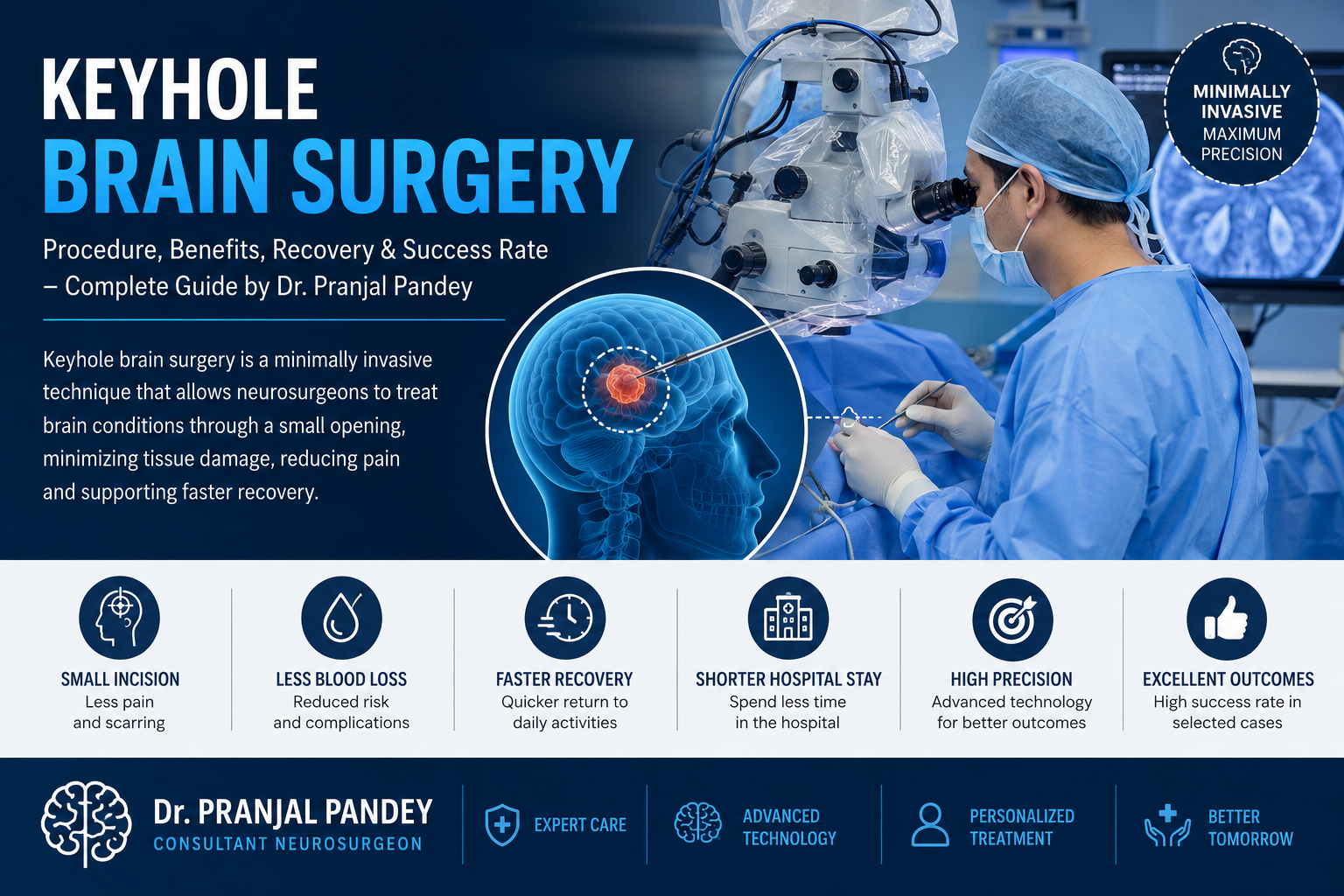
For many people, the words “brain surgery” immediately bring to mind a large incision, a lengthy hospital stay, and a prolonged recovery. However, advances in neurosurgical technology have transformed the way many brain conditions are treated. Today, Keyhole Brain Surgery allows neurosurgeons to access certain areas of the brain through much smaller openings, reducing trauma to surrounding tissues while maintaining surgical precision.
Although not every brain condition is suitable for a keyhole approach, carefully selected patients may benefit from less tissue disruption, shorter recovery, and excellent surgical outcomes.
In this guide, Dr. Pranjal Pandey explains what keyhole brain surgery is, when it is recommended, how the procedure is performed, and what patients can expect before and after surgery.
What Is Keyhole Brain Surgery?
Keyhole brain surgery is a minimally invasive neurosurgical technique in which the surgeon reaches the brain through a small opening in the skull—or, for certain skull-base tumors, through natural pathways such as the nasal passages—rather than a large traditional opening.
The surgery is performed using advanced equipment such as:
- High-definition operating microscopes
- Endoscopes
- Neuronavigation systems
- Intraoperative neuro-monitoring
- Precision microsurgical instruments
These technologies allow the neurosurgeon to perform delicate procedures while minimizing injury to healthy brain tissue.
Which Conditions Can Be Treated with Keyhole Brain Surgery?
Depending on the patient’s condition, keyhole techniques may be used to treat:
- Brain tumors
- Pituitary tumors
- Meningiomas
- Colloid cysts
- Certain brain aneurysms
- Skull base tumors
- Trigeminal neuralgia
- Cerebrospinal fluid (CSF) leaks
- Hydrocephalus (selected cases)
The suitability of the procedure depends on factors such as the size, location, and type of the condition.
Who Is a Good Candidate?
Keyhole brain surgery is not suitable for everyone.
Your neurosurgeon will evaluate:
- MRI and CT scan findings
- Size of the lesion
- Exact location within the brain
- Relationship to important blood vessels and nerves
- Overall health
- Previous surgeries
- Neurological symptoms
A personalized evaluation is essential to determine whether a minimally invasive approach is appropriate.
How Is Keyhole Brain Surgery Performed?
Step 1: Pre-operative Planning
Before surgery, patients undergo detailed investigations, including:
- MRI Brain
- CT Scan
- Blood investigations
- Neurological examination
- Anaesthesia evaluation
Advanced imaging helps the surgeon plan the safest surgical pathway.
Step 2: Administration of Anaesthesia
The surgery is performed under general anaesthesia, ensuring the patient remains asleep and pain-free throughout the procedure.
Step 3: Small Incision
A carefully planned small incision is made in the scalp, often hidden within the hairline when possible.
Compared to traditional brain surgery, the incision is significantly smaller.
Step 4: Creation of a Small Bone Opening
A small opening (craniotomy) is created in the skull to reach the targeted area.
The size of the opening is determined by the specific condition and surgical requirements.
Step 5: Microsurgical Procedure
Using advanced visualization technologies, the neurosurgeon carefully:
- Identifies the affected area
- Protects normal brain tissue
- Removes the tumor or treats the lesion
- Controls bleeding
Preserves important nerves and blood vessels
Step 6: Closure
After completing the procedure:
- The bone is replaced securely
- The scalp incision is closed with sutures or staples
- A sterile dressing is applied
Patients are then shifted to the intensive care unit (ICU) for close observation.
Advantages of Keyhole Brain Surgery
Compared with conventional surgery in appropriately selected patients, keyhole techniques may offer several benefits:
Smaller Incision
Less tissue disruption and a more cosmetically favorable scar.
Less Blood Loss
Smaller surgical exposure may reduce blood loss during surgery.
Reduced Pain
Patients often experience less postoperative discomfort.
Faster Recovery
Many patients resume routine activities sooner, depending on the condition treated.
Shorter Hospital Stay
Hospitalization may be shorter than with traditional approaches in suitable cases.
Lower Risk of Tissue Trauma
Advanced imaging and precision instruments help minimize manipulation of healthy brain tissue.
Are There Any Risks?
Like every brain surgery, keyhole procedures also carry risks.
Possible complications include:
- Bleeding
- Infection
- Stroke
- Cerebrospinal fluid leak
- Seizures
- Temporary or permanent neurological deficits
- Swelling of the brain
- Anaesthesia-related complications
The overall risk depends on the patient’s condition, the complexity of the surgery, and the location of the lesion.
Recovery After Keyhole Brain Surgery
Recovery varies for every patient.
First 24–48 Hours
- ICU monitoring
- Pain management
- Neurological assessments
- Early mobilization if appropriate
Hospital Stay
Most patients stay in the hospital for several days, depending on the complexity of the surgery and recovery progress.
First Few Weeks
Patients are usually advised to:
- Take prescribed medications
- Keep the incision clean and dry
- Avoid heavy lifting
- Get adequate rest
- Attend scheduled follow-up appointments
Return to Normal Activities
The timeline varies based on the type of surgery, the condition treated, and individual recovery. Some patients resume routine activities within a few weeks, while others may require a longer rehabilitation period.
What Is the Success Rate of Keyhole Brain Surgery?
The success rate depends on several factors, including:
- The underlying condition
- Location of the lesion
- Stage of disease
- Patient’s overall health
- Surgical expertise
For appropriately selected cases, keyhole brain surgery can achieve outcomes comparable to traditional open surgery while offering the advantages of a minimally invasive approach. However, the procedure should only be performed after careful evaluation by an experienced neurosurgical team
When Should You Consult a Neurosurgeon?
Seek immediate medical attention if you experience:
- Persistent severe headaches
- Recurrent seizures
- Weakness in an arm or leg
- Difficulty speaking
- Loss of balance
- Sudden vision changes
- Persistent vomiting
- Symptoms suggestive of a brain tumor or aneurysm
Early diagnosis often leads to better treatment outcomes.
Conclusion
Keyhole brain surgery represents a significant advancement in modern neurosurgery, offering minimally invasive treatment for carefully selected brain and skull-base conditions. By combining high-definition visualization, microsurgical precision, and advanced navigation systems, this approach can help reduce tissue disruption, shorten recovery time, and achieve excellent outcomes in suitable cases.
However, the choice between keyhole and traditional brain surgery depends on the nature of the condition, its location, and the patient’s overall health. A thorough evaluation by an experienced neurosurgeon is essential to determine the most appropriate treatment plan.
If you or a loved one has been diagnosed with a brain tumor, aneurysm, or another neurological condition, consulting a qualified neurosurgeon early can help you understand your treatment options and make informed decisions about your care.